


Flying an entire team to parts afar to work together might sound extravagant, but offsites are powerful tools for building a stronger, more innovative, and more connected company. Companies know this, and are spending more than ever on offsites for teams that often don’t see each other in the office every day. And employees think it’s worth it - the same study reported that 85% of employees considered offsites worth the hassle.
But just spending money and being in a new place doesn’t bring out all the valuable aspects of an offsite. It takes a lot of deliberate, purposeful planning to create the kind of conditions where the magic can happen.
So in this episode, we talk about what we’ve learned from organizing more than 25 of these events over the last 15 years. We’ve held a mixture of strategic team gatherings and innovation-focused hackathons over the years, and some of our most successful products have come out of them.
If your role is more about attending an offsite than planning one, you may want to scroll on down to the part where we got input from our team about how to make the most of an offsite as an attendee.
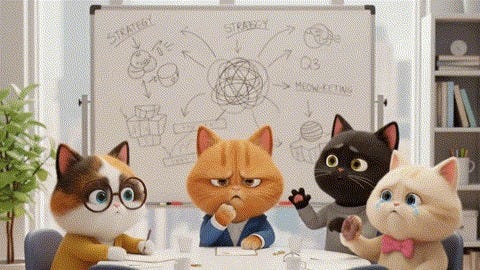
What’s the point of this?
No matter what your stated goal for the offsite ends up being, the most valuable effect is likely to be that it strengthens informal social ties. Offsites remind everyone that they’re working with real people, not just boxes on a Zoom call. Even if you generally work in person, an offsite gives colleagues who don’t know each other super well a chance to connect about stuff that goes beyond work, and that makes a big difference.
These personal connections lead to better collaboration and communication long after everyone has returned home. A study conducted by Dartmouth’s Tuck School of Business found that after an off-site, attendees received almost 25% more incoming collaboration opportunities than before the event. There were spillover effects, too - employees in those departments who didn’t attend the offsite also received more invitations to collaborate.
Those connections are even more valuable when your team is remote or hybrid. Research from Microsoft has shown that remote work can decrease cross-group collaboration by as much as 25% because teams become more siloed. Offsites are a direct and effective way to counteract this by building “bridge connections” between different parts of the company.
Offsites also help align the team on vision and goals. As a former big company employee, I appreciated the opportunity to get a coherent quarterly plan in a document I could read. But it’s even better to have an opportunity to discuss it, ask questions, and see how everyone’s work fits into the bigger picture. Offsites provide a dedicated time and environment for this high-level strategic alignment, creating space to really engage with the material.
Finally, getting people into a new environment sparks creativity and fresh ideas. Breaking from customer tickets and fighting fires puts the team in a different mindset, one that’s more open to brainstorming and long-term thinking.
So even though the costs ($2000-$4000/employee, depending on location and logistics) can be steep, the intangible benefits make it, in our minds, well worth the cost.
Optimizing strategic offsites
A successful strategic offsite is built on a well-structured agenda that mixes together different types of work with deliberate opportunities to forge connections. Over the years, we’ve found a formula that works for us. Here’s how it works.
Start with psychological safety
At all of our strategic offsites, the very first activity is all about making people comfortable and creating psychological safety, especially for folks who are new to the team. A fun, low-pressure icebreaker encourages everyone to contribute.
We’ve done a number of different things over the years, and almost every icebreaker has worked well, at least for most people. Our most-frequently used icebreaker is a work-related rose, thorn, and bud exercise, where everyone goes around and shares something good, something that could be better, and something they’re excited about at work right now. We’ve also done a puzzle together, and a “deserted island” problem: if our plane crash-landed, what items would we bring? This gets people talking and sharing their perspectives in a quirky, fun way. The goal is to establish that every voice is welcome before diving into business strategy.
It’s also a good idea to establish rules of engagement at the outset. The obvious HR rules apply (and we generally don’t go over them), but for our team, we focus on being present. Laptops and phones should be put away unless they’re being used for a session. This signals respect for the time and sacrifice everyone made to be there. Then, it’s on to the strategy update.
Structure the agenda to follow energy levels
The flow of the day matters. Hit the big-ticket items, like the CEO’s strategy update, early in the day before focus starts to wane. That way, everyone’s energy levels and attention spans are high when the most important information is coming their way.
Brainstorming sessions are often most effective right after lunch when blood glucose levels are high. A core rule for brainstorming is that there are no bad ideas. We ask our team to always share their ideas, even if they aren’t that excited about them, and we write down every idea, always. We also ask the team never to say anything critical about someone else’s ideas during the brainstorming session.
The reason is that even a “terrible” idea might spark a brilliant one in someone else.
We also ask the team never to say anything critical about someone else’s ideas during the brainstorming session. The time for filtering and judging comes later; during the session, it’s all about “yes, and...“ thinking, a principle borrowed from improv comedy that increases creativity.
Team-led learning
An all-day marathon of strategy work and brainstorming can be completely exhausting, and deeply unproductive by the end. At the same time, offsites only provide so much time to spend together. So we like to incorporate sessions where team members can teach each other something. This can be work-related, like a deep dive into the company’s database structure, or something completely different. One session from our last offsite involved a team member from a region in China famous for its kite festival teaching everyone how to build their own kites. These hands-on activities build connections in a way that PowerPoint presentations can’t. They also make sure that the time spent feels valuable, but not so draining.

Finally, don’t overschedule. We learned the hard way that back-to-back sessions from 9-to-5 lead to pure exhaustion. Now, we always leave the last couple of hours of the day for dedicated small group work sessions. Small groups can collaborate on a project, catch up on customer support, or pair-program. This prevents burnout, gives teams a chance to build more social connection, and often leads to tangible progress on key initiatives.
Set up the space for success
The environment has a huge impact on creativity. (If you’re interested in a deeper dive on which physical environments are suited to different kinds of work, check out our previous post on the topic. Instead of a windowless hotel ballroom, look for a unique space with natural light and high ceilings, like a large rental house. If the house isn’t big enough for everyone to sleep in, find one near a hotel and have everyone who won’t fit in the house travel (ideally walk) over.
And don’t forget the tech. Almost everyone overestimates their WiFi. When you have 20 people connecting multiple devices at once, a standard residential connection will crumble. Ask for a screenshot of the venue’s upload speed or, better yet, bring your own powerful router as a backup. The same goes for A/V equipment—always have a plan B. We have a portable projector as our A/V-of-last-resort. It’s a cheap investment to guarantee that all the expense of the offsite won’t get ruined by a broken TV.
Hackathons: offsites for innovation
All offsites build connections, but hackathons focus on innovating and building instead of alignment.
Our first hackathon was born from a running joke that if we ever became profitable, we’d celebrate by going to Iceland. When we finally hit that milestone, we looked at each other and said, “Are we really doing this?” We did it!
But while we had a great time in Iceland, we weren’t able to point to a lot of company value from the work sessions we held there. We’ve since made a lot of changes:
From Cooking to Coding: We used to cook all our meals together to save money and build camaraderie. But we quickly realized that planning, shopping, cooking, and cleaning for a large group ate up huge chunks of valuable coding time. Now, we have food catered (or even get a chef) so the team can stay in a state of flow.
Opt-In, Not Mandatory: A hackathon requires a specific mindset. Forcing people who aren’t excited to tinker can be counterproductive. Our hackathons are now optional. Anyone who wants to go submits a short proposal for what they plan to work on. This ensures everyone there is motivated and has already put thought into their project.
Prioritize Flow Time: The schedule is designed for long, uninterrupted blocks of “maker time.” We always have one big group activity one of the afternoons, but the rest of the time is dedicated to focused work. Lunch is available, but optional—no one is pulled out of their work if they’re in the zone.
The goal of a hackathon is to step away from the reactive demands of day-to-day work and dedicate focused time to tinkering and innovation. Research shows that face-to-face interaction in a new environment generates more innovative ideas. Some of our most successful product features have come directly from the subsequent versions of these trips.
Attending an Offsite
If you’re attending an offsite you didn’t plan, it’s important to optimize your mindset and preparation. And it’s worth the effort: a long-term study of a law firm found that offsite attendees received 23.5% more incoming collaboration requests than non-attendees. These events are a powerful way to increase your visibility and impact.
Before You Go: Clear your schedule of any nagging tasks so you can be fully present. Read the agenda to know what to expect and how to pack—you don’t want to be the only one without the right gear for bioluminescent kayaking! If it’s your first time, chat with a veteran attendee to get the lay of the land.
During the Offsite: Participate actively. Listen, ask questions, take notes (especially any action items you want to follow up on) and keep an open mind. Step out of your comfort zone and contribute to brainstorming sessions, even if you think your idea is silly. For introverts, it’s crucial to manage your energy. Use the scheduled breaks to step away and recharge so you don’t burn out.
After You Return: The work isn’t over when you get home. Follow up on the connections you made. Send that interesting article you mentioned or the notes you took during a session. Review your action items and plan to complete them in the coming weeks. Provide constructive feedback to the organizers through surveys. This helps solidify new relationships and makes the next offsite even better.
Tip of the Week
The biggest breakthroughs at an offsite often don’t happen during a formal presentation. They happen in the unstructured moments in between. The most impactful part of your offsite might be the hallway conversation while waiting for dinner, or the chat during a coffee break, or an idea that strikes you during the walk back to the hotel. These transitional times are where ideas cross-pollinate and true connections are made.
If you’re an organizer, intentionally build buffer time into the schedule. Things will inevitably run long, and creating space for these spontaneous conversations adds immense value.
If you’re an attendee, use these moments to connect. Instead of scrolling through your phone, strike up a conversation. Then, within 24 hours of returning, send a follow-up note to the new people you connected with. A simple message saying “Great chatting about X, here’s that link I mentioned” can turn a fleeting conversation into a lasting professional relationship.
To learn more, listen to the full podcast episode.